
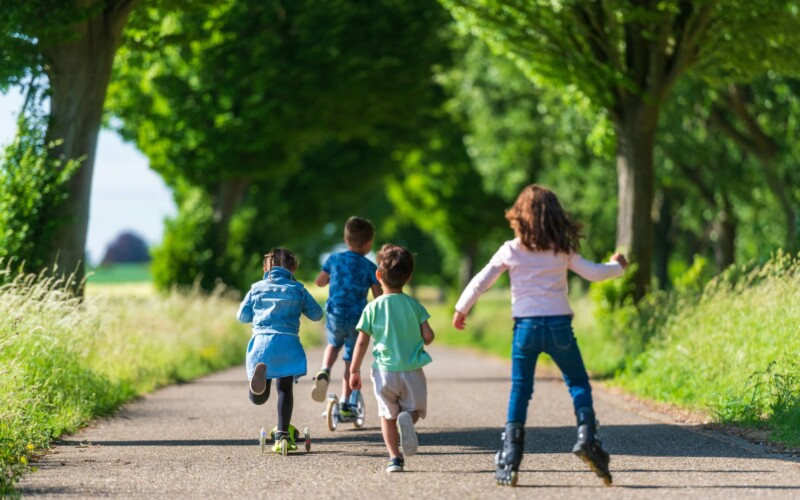
At Children First Canada, we champion the full realization of every child’s rights, as outlined in the UN Convention on the Rights of the Child. Among these is the right to play and leisure (Article 31)—a foundational right that is currently under threat from the pressures of modern life. We are seeing a critical decline in children’s unstructured time outdoors, trading the dynamic, ever-changing environment of nature for static, supervised, and scheduled activities.
This shift is more than a lifestyle choice; it has profound implications for a child’s development, resilience, and overall well-being. The environment is the ultimate learning laboratory, and disconnecting children from it limits their ability to thrive.
The Essential Link Between Nature and Well-Being
The simple act of playing outside is one of the most powerful forms of preventative mental health care. Canadian children face unprecedented levels of anxiety and stress. Exposure to natural settings—whether a forest, a community garden, or even a local creek bed—has been scientifically shown to lower cortisol levels, the body’s primary stress hormone. When a child is allowed to roam freely, climb, and explore, their nervous system finds a necessary calm, improving focus and reducing hyperactivity.
Furthermore, outdoor play is a true form of holistic development. Inside the classroom, learning is often segmented. Outside, a child simultaneously engages their body, mind, and spirit. They develop strong motor skills by navigating uneven terrain, foster resilience by adapting to the weather, and cultivate creativity by turning a stick into a magic wand or a collection of stones into a fortress. Nature provides the original, open-ended toys that stimulate problem-solving and inventive thinking in ways a prescribed curriculum cannot.
Fostering Stewardship Through Connection
The profound connection between play and conservation cannot be overstated. We cannot expect children to become passionate stewards of the planet if they do not have a deep, positive relationship with it first. It is through digging in the soil, observing insects, and marveling at the strength of a tree that a child internalizes the value of the natural world. By providing opportunities for genuine, joyful encounters with nature, we are cultivating a generation that instinctively understands the necessity of environmental protection.
This means families and communities must consciously prioritize “green time” and deliberately reduce screen time. We must embrace the messiness of play—allowing children to jump in puddles and get dirt under their fingernails—because these are the sensory experiences that build strong, lasting memories and a profound sense of place.
Celebrating Moments of Uninhibited Joy
Reclaiming the right to play is a community effort. It involves advocating for accessible green spaces, supporting nature-based education, and ensuring that community events prioritize interactive fun.
After a successful day of exploring, a community clean-up, or a school fair promoting sustainability, there is a powerful shared joy and sense of accomplishment. These are the moments of connection that reinforce a child’s sense of belonging and value. Capturing this uninhibited happiness allows children and families to hold onto that positive feeling long after the day is over.
If your community group, school, or non-profit is planning an upcoming event and wants to capture the fun, creativity, and energy of the participants, integrating an interactive activity that produces instant, tangible memories is invaluable. You can find high-quality, engaging photo booth rentals that celebrate this spirit of fun and connection at Snaptique.
Our Shared Commitment
The right to play is not a luxury; it is a fundamental ingredient for a healthy, resilient Canadian childhood. By championing unstructured outdoor time, we are investing in our children’s physical and mental health, nurturing their creative spirit, and ensuring they grow up to be champions of the world they inherit.