















What We Do

Raising Canada: The state of the nation’s children 2026

Childhood is changing before our eyes, and the evidence is impossible to ignore.

Since 2018, the Raising Canada report has tracked the top 10 threats to childhood and provided a national picture of the health, safety and wellbeing of Canada’s children. This year, the report delivers an urgent wake-up call.

For the first time, online harms are the #1 threat facing children in Canada.

Online harms are no longer confined to teenagers on social media. From AI-powered toys and excessive screen use in the earliest years to social media, gaming, messaging apps, online sexual exploitation and AI chatbots, children are growing up in a digital world that was not designed with their safety, rights and healthy development at its centre.

And what happens online doesn’t stay online.

Raising Canada 2026 finds that online harms are increasingly accelerating many of the other threats affecting children, including poor mental health, declining physical activity and play, bullying, racism and discrimination fuelled by online hate, violence and child abuse, and vaccine misinformation.

Canada’s 8 million children deserve better.

Canada now ranks 22nd out of 37 high-income countries on UNICEF’s Child Wellbeing Index and 72nd out of 194 countries on the 2026 KidsRights Index.

A country with Canada’s resources should be one of the best places in the world for kids to grow up. Raising Canada 2026 shows how far we have to go, and what we can do to change course.

Every data point represents a child: a life, a story, and a future worth protecting.

The findings of Raising Canada 2026 reveal the scale and interconnected nature of the challenges our children are facing:

  • More than 100,000 reports of online child sexual abuse are processed every month by the Canadian Centre for Child Protection.

  • Police-reported online child sexual exploitation increased 347% between 2014 and 2024.

  • Police recorded 16,905 incidents of online child sexual exploitation in 2024, a rate of 223 incidents for every 100,000 children and youth aged 17 and under.

  • Nearly 1.4 million children, or almost one in five, live below the poverty line, marking the third consecutive annual increase.

  • 2.4 million children, or 30.8%, live in food-insecure households.

  • 44.9% of youth aged 15 to 17 report experiencing emotional abuse.

  • Canada lost its measles elimination status in November 2025, for the first time since achieving it in 1998.

  • Anti-Muslim hate crimes increased 173% between 2020 and 2024, while reported Antisemitic incidents increased 145.6% since 2022.

Together, these findings tell us something Canada can no longer afford to ignore: the kids are not alright, and childhood can’t wait.

Canada's Top 10 Threats to Childhood

Raising Canada 2026 identifies the ten most pressing threats facing children:

#1

Online Harms

#2

Unintentional and Preventable Injuries

#3

Violence and Child Abuse

#4

Child Poverty and Food Insecurity

#5

Poor Mental Health

#6

Vaccine-Preventable Illnesses

#7

Bullying

#8

Systemic Racism and Discrimination

#9

Lack of Physical Activity and Play

#10

Climate change

These challenges do not exist in isolation. Poverty affects children’s health and ability to learn. Mental health is connected to belonging, safety and social connection. Digital environments can amplify bullying, exploitation, hate and misinformation. Climate change affects children’s health, homes, schools and opportunities to play.

The report also examines how these challenges disproportionately affect children who already experience systemic barriers and inequities, including First Nations, Métis and Inuit children, racialized children, 2SLGBTQIA+ youth, children with disabilities, and children living in low-income, Northern and remote communities.

Emerging Threat: The Canadian School Experience

For the first time since the COVID-19 pandemic, Raising Canada identifies an emerging threat related to children’s experiences at school. Schools across Canada are facing growing pressures from chronic absenteeism, escalating violence, increasingly complex learning environments, and the rapid integration of artificial intelligence.

Schools are among the most important places in children’s lives. Ensuring they are safe, inclusive and supportive environments for learning, connection and healthy development must be a national priority.

Watchlist: Infant Mortality

Infant mortality has moved from the Top 10 Threats to the Raising Canada Watchlist. This reflects modest improvements in infant health outcomes, not a reduction in importance.

Serious inequities persist, particularly for First Nations, Métis and Inuit children and families and those living in Northern and remote communities, where longstanding disparities in access to healthcare and the social determinants of health continue to affect outcomes. Every child has the right to the healthiest possible start in life. Canada must continue to monitor progress and act on persistent inequities.

From Evidence to Action

Raising Canada is not simply a report about what is going wrong. It is a roadmap for what Canada can do next.

The challenges children face are interconnected, which means our solutions must be too. Governments cannot address children’s mental health separately from poverty, education separately from violence, or online safety separately from children’s rights and healthy development.

Canada needs coordinated leadership that puts children at the centre of decision-making.

As Parliament returns this fall, Canada’s children must be at the top of the national agenda.

Children First Canada and our partners in the Countdown for Kids campaign are calling on all federal parties to take three immediate actions:

Calls to Action

Endorsed by our Youth Advisory Council, Young Canadians’ Parliament, and Council of Champions, these actions provide immediate priorities for governments and decision-makers:

1. Strengthen and Pass the Safe Social Media Act

Parliament should strengthen and pass Bill C-34 without delay, ensuring children are protected across social media, gaming, messaging, livestreaming, AI and emerging technologies. Fully resource the Digital Safety Commission and invest in free, evidence-based digital literacy for children, families, educators and healthcare professionals.

2. Create a National Strategy for Children and Youth

Pass Bill S-212 and create a comprehensive National Strategy for Children and Youth that puts children’s rights and wellbeing at the heart of government decision-making. The strategy should be developed with children and youth and coordinated across federal, provincial, territorial and Indigenous governments.

3. Invest in Children Through Coordinated Action

Children experience these challenges together, and governments must respond the same way. Align investments across health, education, mental health, poverty reduction, food security, child protection, housing, digital literacy and other systems that shape children’s lives, with additional resources directed to children and communities facing the greatest inequities.

Join the Movement: take the Raising Canada Pledge

Change doesn’t start and end with government. Parents, educators, healthcare professionals, community leaders, businesses, technology companies and young people all have a role to play.

The Raising Canada Pledge turns the evidence in this report into practical actions Canadians can take at home, at school, in their communities and with Parliament.

Together, we can create safer digital environments, protect time for play and learning, advocate for stronger laws, listen to young people, and hold decision-makers accountable.

In Loving Tribute

Behind every statistic in the Raising Canada report is a child.

A child who was loved. A child with family and friends, dreams and talents, laughter and possibility, and a future that should have been theirs to live.

This report is dedicated to the children whose lives were tragically cut short following cyberbullying, sextortion, and other harms connected to the digital world. They are no longer here to tell their own stories, so we remember them by name.

These are the children whose stories we know. There are others whose names never made headlines, and countless more who are living with the lasting impacts of online harm. Their lives were full of possibility. Their pain was preventable.

This tribute is also for the children who survived. The children carrying trauma, shame, fear, or pain because of something that happened online. The children who have been bullied, exploited, manipulated, threatened, or exposed to harmful and hateful content that they should never have witnessed. What happens online is real, and its consequences do not stay behind a screen.

And we honour the parents and families who have turned unimaginable grief into action. They have spoken their children’s names when it would have been easier to remain silent. They have shared deeply painful stories, sought justice, demanded accountability, and walked into classrooms, courtrooms, newsrooms, legislatures, and Parliament carrying a message no parent should ever have to deliver:

We must do better for our children.

Their courage has helped awaken a country to the urgency of online safety and driven changes that will protect children they may never meet. We recognize the enormous personal cost of this advocacy and, above all, the extraordinary love behind it.

To every child who has been harmed, and to every family fighting for justice, accountability, and change: we see you, we hear you, and we stand with you.

May the children we have lost be remembered not simply for how they died, but for how they lived, who they loved, who loved them, and the change their lives continue to inspire.

We honour them by refusing to accept preventable harm as the price children must pay for growing up in a digital world.

We honour them by acting.

No more waiting. No more excuses. Time is up on online harms.

Raising Canada 2026 was produced by Children First Canada in collaboration with PolicyWise for Children & Families, The Hospital for Sick Children (SickKids), and the University of Calgary, drawing on evidence from researchers, clinicians, governments, community organizations and young people across Canada.

Children First Canada gratefully acknowledges PolicyWise for Children & Families as the National Presenting Partner, and The Hospital for Sick Children (SickKids) and the Canadian Medical Association as Co-Presenting Partners, for their leadership, partnership and commitment to improving the lives of children and youth.

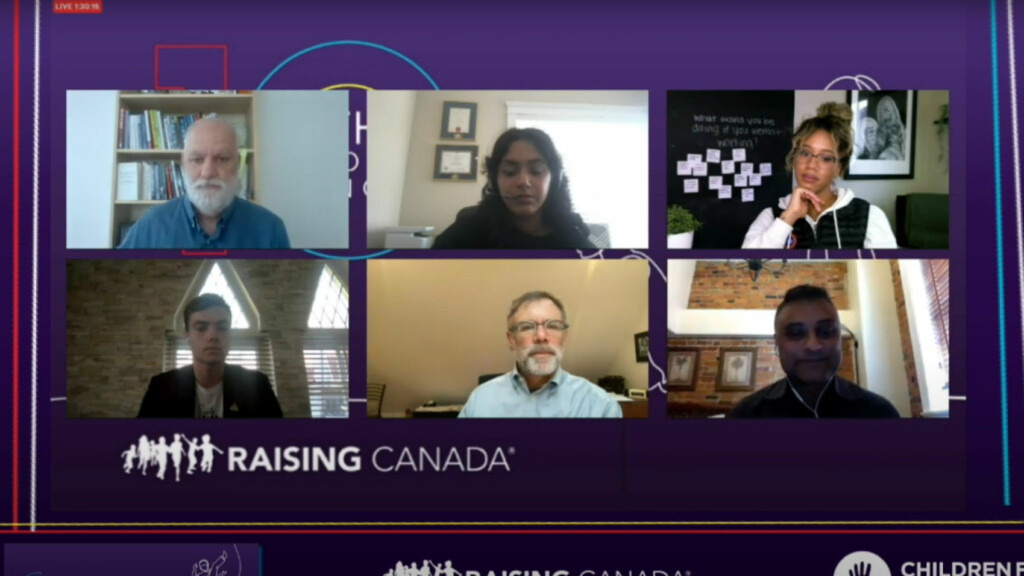
View the 2022 Raising Canada event below:

Event Speakers

Naki Osutei

Associate Vice-President, Social Impact (Canada), TD Bank

Opening Remarks

Rhiannon Rosalind

President and CEO, The Economic Club of Canada, Founder of The Jr. Economic Club of Canada, CEO & Co-Founder of The Global Institute for Conscious Economics (GICE), and Member of the Council of Champions at Children First Canada

Moderator

Lynn Barr-Telford

Assistant Chief Statistician of the Social, Health and Labour Statistics Field at Statistics Canada

Sara Austin

Founder and CEO of Children First Canada

Thalia Bueno

Thalia Bueno

Youth Advisory Council Member, Children First Canada

Dr. Joanna Henderson

Director, Margaret and Wallace McCain Centre for Child, Youth & Family Mental Health, CAMH

André Picard

Health reporter and columnist for The Globe and Mail

Moderator

Michelle Mobarrez

District Vice President, Calgary Central, TD

Opening Remarks

Alana Riley

Alana Riley

Senior Vice-President, IG Wealth Management

Dr. Susanne Benseler

Director, Alberta Children’s Hospital Research Institute, Professor, Department of Paediatrics, Cumming School of Medicine, University of Calgary, Husky Energy Chair in Child and Maternal Health, and Alberta Children’s Hospital Foundation Chair in Pediatric Research

Sara Austin

Sara Austin

Founder and CEO of Children First Canada

Kiran Layal

Director of Brand Management, SureCall

Azaad Gill

Youth Panelist

Kluane Adamek

Yukon Regional Chief, Assembly of First Nations

Take Care

Take Action!

Help spread the word about the top 10 threats to childhood. Don’t know where to start? We’ve got you covered. Check out our infographic and Calls to Action which you can share
on social media.

Take Care

“Childhood is changing before our eyes, and the evidence is impossible to ignore. Online harms are now the number one threat because they undermine children’s most fundamental rights to survive and thrive. We cannot continue asking children to navigate digital environments that adults have failed to make safe. As Parliament returns this fall, protecting children must be at the top of the national agenda. Passing a stronger Safe Social Media Act is an essential first step, but it cannot be the last.”

— Sara Austin, Founder & CEO, Children First Canada

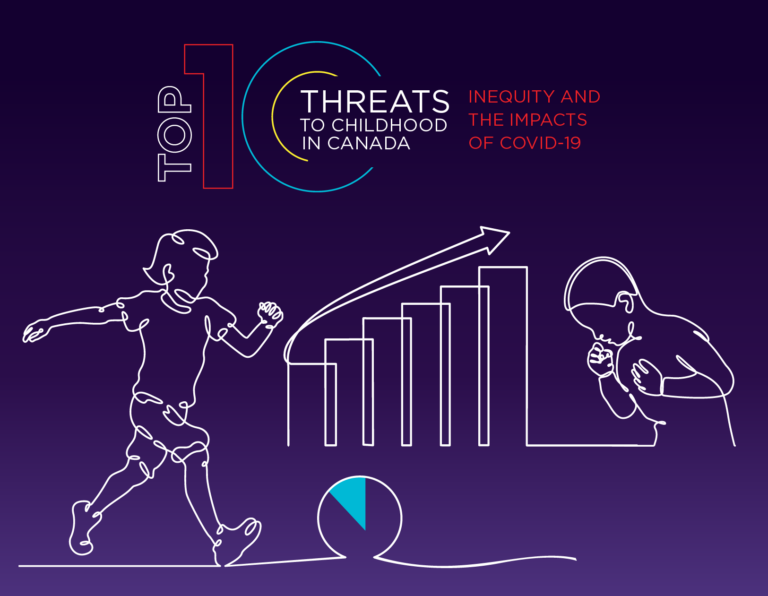
Top 10 Threats to childhood in Canada

Get the Facts

Did you know that almost one in five children lives in poverty? Check out our infographic for more statistics about the top 10 threats facing kids and the impacts of COVID-19.

Drawing Contest

A Better Canada For Kids Drawing Contest

Children First Canada is launching a drawing contest for children 13 and under across Canada. Selected artwork will win some great prizes and be featured in our upcoming Raising Canada report, due out later this year.

Upcoming Events

No upcoming events

Learn More

New Report Reveals Record Increases in Violence, Poverty, Mental Health Issues and Sexploitation Among Canada’s Kids

Annual ‘Raising Canada’ report includes a unified plea by child advocates for urgent government action. October 16, 2024, Calgary, AB – The state of childhood in Canada has reached a breaking point. The seventh annual Raising Canada report, released today, finds that the top 10 threats to childhood are escalating,...

More
Load More

Event Partners and Sponsors

TD Ready Commitment
Sure Call Logo
IG Wealth Management Logo
Osler logo